Showing posts with label food. Show all posts

Wednesday, March 2, 2016

Tourist's Paradise-Gwangjang Market- 광장 시장

Jongno 5-ga is the Mary Poppins's bag of street markets. An unassuming, non-transfer station with hardly a unique name, the exit signs boast not one but three different markets: Dongdaemun Shijang, Pyeonghwa Shijang, and Gwangjang Shijang (shijang means market, just so we're clear).
image
I headed out this way at the urging of a student in search of Korean tartar, AKA a raw beef dish called 육회 (Yook Hwae). Nothing sets the spirit on fire like a proper quest, and thus the day promised to be full of adventure. Upon arrival, the market presented its first challenge: the distraction of dozens of food stands contested by the churning crowds of Sunday shoppers. Before pushing my way down the first alleyway, I sensed in my heart of hearts the truth I would soon learn: Gwangjang Shijang is a tourists' paradise.
image
Tourists' paradise indeed: nearly every vendor catered to us with a dash of commercial English as the place bustled with locals and foreigners alike, all clamoring to grab a seat at one of the metal counters and test their valor against Korea's finest and weirdest nibbles. And there I stood in the middle of them all, weilding my camera of photographic mediocrity in preparation for a Trial by Street Market, the international standard of any tourist destination. Strange foods beckoned from every nook, accompanied by the piercing voices of ajummas screeching their mysterious names. Like every quality fairy tale knight, I nearly abandoned my quest in favor of these enticing rewards, crunching on a miniature, red pepper pasted crab that was surprisingly sweet and sipping a fermented rice drink, shikae (식혜 ) that doesn't bother pretending to be anything other than saccharine. Gwangjang Shijang rumbled with the satisfaction of every tourist discovering the holy grail of travel: something totally authetic and real, yet somehow exactly what they had in mind when their pilgrammages began.
imageimage
Eventually I regained my senses and was able to locate the true aim of this expedition, the raw beef. It arrived on a mid-size plate, its glistening strips of red meat sprinkled with sesame seeds and adorned with a shiny yellow yolk. Our waiter offered a welcome explanation, instructing us to mix the meat into a hidden bed of pear slices and dig in. Although I wished I had spotted the bibimbap option on the menu, which offered less meat in exchange for rice and some veggies all for a lower price(!), my friend and I eagerly scraped the plate clean, feeling valiant next to a table of four ajeosshi (older men) who had ordered the same thing. On an impulse, likely due to the constant assault of delicious smells and advertising, we also ventured into two more dishes: a whole, fried sole (Gajami/가자미) as well as the market's other famous dish, mung bean pancakes (Bindaetteok/빈대떡). Despite being a last minute decision, bindaetteok was the true treasure from this quest: a thick, greasy, slab encrusted with little gems of salted pork. My mouth is watering now.
imageimage
Empty plates and full bellies, we departed Gwanjang Shijang and on the trusty steed that is the Seoul subway. Next quest: the search for a bard who can properly relate the tale of a tourists paradise, the golden ratio of uncomfortable, exciting, and delicious that can make any vagabond feel victorious.

Monday, April 13, 2015

Guest Post-- Michael Eats Fruit for Thought

I made my own calendars where the year begins on the day I ate my first banana (17/3/2014 FYI, or 3/17/2014 if you’re wacky). Before I moved to Korea I never ate fruit and it was just one of the many firsts Korea would demand. As it is, I don’t really want to tell you about Korea’s firsts. I want to tell you about coming home and how my returning home compares to Korea through the medium of fruit.


Mangoes just scream sunshine and good times. So, when I saw mangoes in a Korean supermarket I was sure they would be delightful. Oh how wrong I was. I’m told I was low-balled on mango quality because these were terrible mangoes. They somehow managed to taste both fresh and putrid. The expectation of mango and the actualisation of mango were as far apart as the transport in Korea and the transport at home. In Korea, you pay for transport with a smart card and everything is cheap and clean and efficient. Journeys join up so you don’t have to pay full price for every transfer. If ever the Korean public transport system grinds to a halt, I’m sure they’ll have something less convenient to get people around. Maybe personal floating clouds or something.  In Glasgow, the transport is expensive and definitely not user friendly. Buses require exact change to pay their expensive fares (fares like £4.30 – who has 30p just lying around?) and the subway has not been extended since it opened in 1896 or upgraded in decades. You pay for each section of your journey anew and it all starts to add up. Similar journeys are 4 times more expensive in Glasgow and about 100 times less convenient. We’re paying for Korea and somehow getting Cambodia.


Kiwis are a bit like big testicles, but that’s not currently relevant. When I tried kiwi I found it a bit bland and then it had a tang and then it got enjoyable. I didn’t enjoy kiwi much at first, but it got better as I went. This fruit of contradictions maps well with the difference in my nights out in Korea and in Glasgow. In Korea I found it difficult to find one particular place I really enjoyed going, but as I went out more I got more used to the scene and enjoyed that things were open late. At home the journey is reversed. I know all the awesome places to go, but because of Glasgow’s alcohol problem and the stupid way we deal with it, all clubs and bars must be closed by 3am. This means nights out are curtailed and you’re left to try and get home when everyone else in the city centre is doing the exact same thing. Add the bad public transport and tens of thousands of people (who would really rather still be drinking) trying to get a handful of taxis and it makes getting home a dangerous proposition, even if it’s just because you’re waiting outside in the cold for ages. 

Dragon fruit was supposed to be exciting. Have you seen a dragon fruit? It looks like Ryu’s fireball from Street Fighter or, you know, a dragon’s fire! Wow! How amazing is dragon fruit going to be? I couldn’t wait to try dragon fruit. Seeing all my friends again was supposed to be exciting. Do you remember all those amazing times from before you left for Korea? How amazing is it going to be to make a whole new bunch of memories? On the surface, dragon fruit was all raz-ma-taz and full of exciting promises. Once you cut into it, it looks a bit like an Oreo McFlurry and you think you’re about to have a taste sensation. Ultimately, dragon fruit was disappointing. On the surface, seeing my friends again was all exciting and full of adventurous promises. Once you get into making plans, you think things are looking good, life will be sensational. Ultimately, seeing your old friends becomes disappointing. Dragon fruit is a little bit underwhelming. My friends all had their own lives which had settled while I was away. It’s hard to unsettle your friends and while they agree to adventures on principle, agreeing the specifics and matching up disparate schedules is almost impossible. The closed bubble of being an English teacher in Korea meant everyone was in the same boat - people were always looking for things to do and places to go. Coming home is kind of dragon fruit (it’s an adjective now).


When I tried persimmons I tried plural. I bought different shapes and colours and sizes. I thought they would all taste different. Unsurprisingly they all did taste different. This was another fruit of extremes. The first I tried was a small yellow persimmon that I thought would be the worst. I was wrong. It was sweet and much better than I expected, and didn’t even taste too fresh. The big red persimmon was another story. I cut it up and it looked a little juicy. I thought the brighter colour would mean it was sweeter. I was wrong. My first reaction “mmm,” and then all of a sudden my teeth felt weird and a bitter taste invaded my mouth. It felt like all the moisture in my mouth had been sucked into the persimmon I’d just chewed up. One of my friends suggested that is probably what it would be like if you ate one of those wee bags of silica gel that comes with new shoes. 

Living with my mum has had a similar effect on soaking up all the fun I wanted to have when I got home. In Korea I lived in a small, one-room apartment, but it had a sweet broadband connection. Plus it was only about 7 minutes from bed to work. Living in one room doesn’t sound awesome, but the nature of life in Korea is that you don’t have to spend too much time in it if you don’t want to, since getting everywhere was easy and people were up for activities. My wee room was much better than expected. Living with my mum is more like the big persimmon. At home there’s no sweet internet connection, but the bitterness of being without any internet connection except my phone. It is miles away from anything and, thanks to the extortionate transport prices, it costs a fortune to go anywhere for anything. Add to that the fact I happened to get stabbed not far from here so I don’t feel entirely safe getting off a bus late at night. Living with my mum has had it’s nice times, but it’s largely been big persimmon.


Banana was far and away my favourite food. In fact, now that I’m home I often share a banana with my nephew who loves 'nanas'.  I have nothing bad to say about bananas. They are delicious and I’ve been a fool to not have them in my life. In that respect, Korea’s bananas was my job. I loved my job, even if my workplace wasn’t awesome. Teaching kids is probably the best thing I’ve done with my life and going to Korea gave me the clear career goal I’ve wanted for years. No Korea would have meant no bananas and no plan to become a primary school teacher. Glasgow’s bananas is probably...Tinder? I’ve not really gotten to the end of Tinder in Glasgow yet and that can’t be a bad thing. Not really. The real bananas at home is my nephew. He is awesome and growing up and talking and doesn’t give me as many cuddles as I would like, but he makes me laugh all the same. He loves being chased. Sometimes he thinks (or pretends, who knows) tree branches are dinosaur bones. He’s bananas.

Bananas aside, my life must sound pretty gloomy, but it isn’t that bad. Sure I didn’t like lots of the fruit I tried and there’s plenty to complain about at home, but I came home for a reason. As much as I look forward to trying new fruits, I’m looking forward to getting back into teaching here at home and becoming a better teacher. Once I stop living like a 14 year old, I’m sure I’ll stop complaining like one. 


Michael O'Donnell would be a polar bear if he could be any animal, but he'd feel bad about eating exclusively meat. He has nothing personal against seals or walruses. He recently tried broccoli for the first time and didn't hate it.

Monday, March 9, 2015

Mixed up in Miami: Pros and Cons

Sick of winter? Jealous of those of us in tropical climates? Miami seduces even the toughest Canadian with the temptation of a permanent escape from the Abominable Snowman. But if you are thinking of moving, don't waste time comparing a list of pros and a list of cons. What you need is a list of Pros and Cons because yes, Miami is that confusing.

1. Spanish is Everywhere
On the radio, across billboards, in the restaurant and the supermarket and the streets. As of the 2010 census, 63.77% of the population in Miami-Dade County speaks Spanish. Am I practicing? Not really. Sure, the woman taking our order doesn't speak English, but it doesn't seem like she'll be charmed a gringa struggling to sputter some Spanish at her.

2. Diversity
Miami has one of the highest percentages of foreign born population in the world. This doesn't mean that it's the most diverse, but it blasts many other places (like South Korea) out of the water. For example, there is access to basically any kind of food you could want. In the past few weeks I've enjoyed Korean, Japanese, Greek, German/Austrian, Mexican, Cuban, Italian, Brazilian, Indian, Thai, and probably more.

3. Weather
You (could) wear shorts every day, seeing as it's 80 degrees most of the time. I don't even own a jacket anymore. Sometimes that doesn't work out so well, but it's a luxury to be warm every morning when you get out of bed. I get sweaty on my walk to work even though it's 8:30 AM in January. The constant climate for body-baring does lead to some places basically becoming Barbie Land. I happened upon a Model Beach Volleyball competition, and probably see a Maserati per day, on average.


4. Tourism
The beaches are here and you can go all the time. Sparkling water, direct sunlight, and sand. The water is everywhere but you can't have it. There's no parking, or there's only expensive parking, and you have to drive past miles of privately owned seaside before you reach a public, tolled, and likely crowded beach. Tourist attractions cost money, and not chump change. It's about $20 a person to get into two of Miami's most lauded destinations, Fairchild Tropical Botanical Garden and Vizcaya Museum and Gardens. Hope they didn't want me to visit more than once, because I'm gonna avoid spending that lunch money and keep my eyes peeled for the rumored free admission days.

5. Landscape
There are adorable little lizards and other surprising and fascinating flora and fauna everywhere. Check out this short documentary about fluorescent local coral! However, many of these creatures are either invasive or endangered... and if not that, then they are going to be underwater in about 100 years.


6. City Layout
"The time is always now!"
The city is sprawl, limited here and there by either ocean or alligator territory, and the traffic is a formidable and seemingly unpredictable beast, from work day rush hours to random fifteen minute back-ups for no apparent reason. On top of this, people drive like they're Sterling Archer, or like they can only see the edges of the road, not the lines or the other cars. This shouldn't be too big of a problem because Miami has both a metro line and a bus system, but despite that fact public transportation is essentially nonexistent. I admit I might be simply spoiled from my residence in Seoul, a public transport utopia, but the facts are unavoidably underwhelming. You can't take the metro to the Miami Beach, the city's most important tourism spot. If you take a bus, there's a good chance it's late, inordinately expensive, and the air conditioner has probably been dripping water all over the empty seats at the back of the bus.


To conclude, Miami isn't like Korea, which isn't surprising, but it isn't like the U.S. of A, either. In Korea I was a 'real' foreigner, and it garnered for me all kinds of sympathy, assistance, friends and excuses for my embarrassing moments. In Miami, I'm a 'fake' foreigner. Still searching for the hip spots to hang? Don't know the most efficient ways of getting around? Can't communicate effortlessly with someone? Wait a minute...aren't you from this country?! A redeeming quality: this unfamiliarity is where I can begin to explore, and (hopefully) find that keen feeling of accomplishment, the one that comes at the end of the day, when your ankles are dusty from walking, your feet are tired, and your mind is buzzing with the aftermath of adventure.


Monday, October 27, 2014

Jukjeon Edible Treasures

Jukjeon looks like a city in the eyes of an American girl, but compared to Seoul it's really out in the boonies. If you ever find yourself down on the Bundang line though, here are (some of) our favorite places that are close to home.


First Nepal
Just about the first meal I had in Korea, First Nepal is Dankook University's diamond in the rough. Serving dishes standard to American Indian restaurants, the curries are always spicy and the naan is cooked to perfection. Plus, the absolutely adorable owner always provides a lassi, sometimes mango, sometimes banana, while you wait for your food. And as if that weren't enough, be sure not to miss the endless reel of Bollywood dance videos paired with mismatched music.


First Nepal 퍼스트네팔
경기도 용인시 수지구 죽전동 1321-3
Yong-in suji-gu Jukjeon-dong 1321-3


Jung Seong Bon Shabu Shabu
Shabu Shabu is what Korea calls "hot pot": it's a huge bowl of boiling broth in the middle of your table, to which you add paper thin slices of meat, loads of veggies, and noodles to cook before your eyes. The best part is, after you have the veggies and the meat and the rice cakes and the dumplings and the noodles, the server comes and scoops out some of the now stew-like broth, and then adds some cooked rice and creates Korean rice porridge, called juk. And despite the fact that you felt ready to explode about twenty minutes ago, the juk is so damn good that you can't help but scoop it into your mouth.


Jung Seong Bon Shabu Shabu 정성본
경기도 용인시 수지구 죽전동 1328-2 단대프라자3 지하 1층 101호 
Yongin sujigu jukjeondong 1328-2 B1 1

http://www.jungsungbon.com

https://www.facebook.com/jungsungbondankook


BBQ by James' (old) place
In my opinion, this is the best BBQ place in the area. No, I haven't tried them all. But I actually remember the meat having it's own flavor, as opposed to just shoveling pieces into my mouth as quickly as possible. Bonus: the rice here is so good that I creepily sneaked around and took a picture of the bag so I could buy it and make it myself. Don't forget to order rice!! 


Yuganea Sutbulchon 유가네 숯불촌
경기도 용인시 수지구 죽전동
Jukjeon-dong, Yongin Suji-gu, Yongin


Yamadaya Udon

When Boris first visited in January, our Awesome Obie Korean friends took him to a restaurant that (apparently) is pretty famous for its handmade udon (thick, Japanese wheat noodles). I didn't get to go because I was at work. Hmph. Anyway, months later I finally made it to this Udon place, and then went back way too many times for how obnoxious it is to get to. The set plates come with tempura (a special batter for frying things like shrimp and thin slices of pumpkin), as well as a couple pieces of sushi. I loved the cold udon which has little broth, but the warm dishes were equally slurp-able.


Yamadaya Udon 야마다야

경기도 성남시 분당구 구미동 226-7
Gumi-dong, Bundang-gu, Seongnam, Gyeonggi-do 226-7
(not open on Tuesday!)


Japanese Ramen
I found this place through a useful location-based social networking group on facebook. I've never been to Japan, so I can make no comparisons in that direction, but the price here is friendly and the ramen is scrumptious. Salty broth, chewy noodles, and savory cuts of pork that melt on the tongue. Only caveat: they aren't open on Sunday, in my opinion the ideal ramen day.


Japanese Ramen 라멘만땅 분당오리점
경기도 성남시 분당구 구미동 189-1 성우스타우스 117호
Gumi-dong, Bundang-gu, Seongnam, Gyeonggi-do 189-1 117


Jogae on Cafe Street
I've only been to this place once, but I'm a sucker for seafood so this had to make the list. You'll sit on mismatched plastic stools around a metal BBQ pit called your table, on which sizzles an exquisite tower of shells: oysters, mussels, clams, and some shrimp all piled up and ready to be devoured.


구울래?찔래?
경기도 용인시 기흥구 보정동 1191-11
Giheung-gu, Yongin bojeongdong 1191-11


55 Chu

Whenever one of my students brings food to class, I unfairly exert my authority and ask that they share their food with...me. Usually they laugh and comply and I will take a teensy bit if I'm certain it won't be the most repulsive thing I've ever tried. When they offer more, I say 'no thank you' and tell them to put it away. Except this one student. She brought in fresh churros, still warm, and would offer them to me before I noticed she had them. And every time she offered, it was impossible for me to refuse. They were so crisp, yet soft, not too sweet, hint of cinnamon...and still warm. Swoon.

After a few failed teacher-student communications ("Teacher, it's by my house!") I finally learned where 55 Chu is located, and dragged all my foreigner coworkers on an adventure to heaven.


55 Chu오오츄
경기도 용인시 수지구 죽전동 1324
Jukjeon-dong, Yongin Suji-gu, Yongin 1324

https://www.facebook.com/55chu

Friday, October 17, 2014

Korean Ramyeon Rundown

During my last few weeks in Korea, I realized I had picked one kind of ramyeon I liked and failed to branch out to the dozens of types that fill supermarket and corner store shelves. I googled "best Korean ramyeon" and became enlightened by the god of instant noodles, the Ramen Rater. I didn't fancy all ten items on his list, and couldn't find others, but here's my very quick review of the ones I did try. 

Bt the way, everyone in the states should liberate themselves from Maruchan ramen and find the Asian food mart. (or even aisle, if your grocery store is bougie like that). Also in Korean, 


Buldalk Bokkeumyeon
Slimy Sauce. Such SPICY! 

6/10


Bibimmyeon

I can eat them cold or warm AND I taste apple and cucumber?! 

8/10


Jinja Jinja

The peanut taste is so delicate.

8.5/10


Namja

Chewy noodles. I enjoy enjoying it because it's supposed to be for 'namja's (men). 

8.5/10


Kko Kko

Tastes like a bowl of chicken quesadilla. 

9.5/10


Extra props to the RAMEN RATER. Dude has a BLOG about RAMEN. Awesome.

Monday, May 12, 2014

Gangneung (강릉)

We went on vacation to Gangneung, a small beach town on the northeastern coast of the country. There wasn't too much information on the internet, at least not in an organized sense, so this post can hopefully be of use to people who, like me, find themselves googling "Gangneung blog" in hopes of adventure ideas. 

Hostel, Gyeongpo Beach (경포해변)

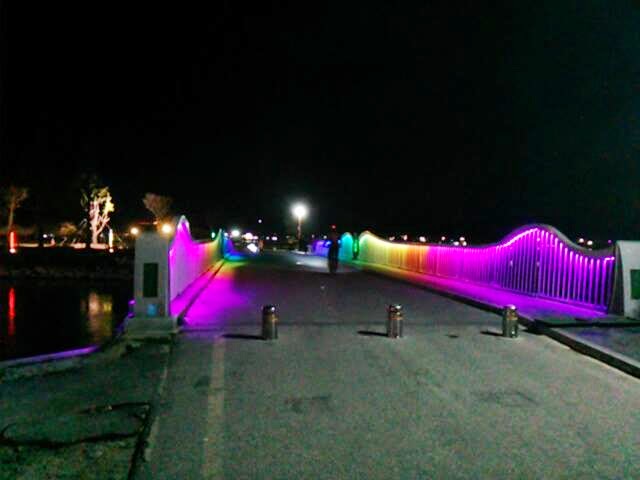
Our hostel was a quick cab ride from the train station. We walked there when we arrived which was a mistake, but it was cool to see the area. Myunganae Guesthouse was right on the beach. Technically, it was on Gangmun Beach, but it was right next to this awesome rainbow bridge (not to be confused with the rainbow footbridge) that led to a more bumpin' beach, Gyeongpo.

This is the footbridge (photo cred: Tyler)...
...the distinction is crucial.
Gyeongpo was the hang out place of the town. Mind you, this was pre-beach season, so there was no swimming or rainbow rows of umbrellas. Just a stretch of sand and waves and little pockets of people being merry and setting off fireworks. Korea loves fireworks, and drunk people on the beach do, too! Along the beach is a boardwalk and a line of fish restaurants. The atmosphere was ideal, the buzz of warm weather and vacation. On our first night we got seafood stir fry which turned out to be seafood soup, and it was delicious! As long as you're not shy about cracking crab legs and licking your fingers at the dinner table...and we definitely weren't.


Unification Park(s) (통일공원)
On Day One we grabbed our new friends from the hostel and hopped on a bus to Unification Park. Things in "Gangneung" are a bit spread out, so it took some time to get all the way down to this tourist attraction, and it felt like we had left the town because, well, we had. (Pro Tip #1: Cashbee and TMoney cards work on the buses in Gangneung, just be sure to charge up before you leave) The park is inconveniently spread out in two parts, with a busy, winding beachside road connecting them. The first bit is basically an outdoor military museum with airplanes and tanks, and an indoor museum that is actually about the Korean War and unification efforts.  The signage inside the museum was mostly in Korean, but there's still a lot to learn from what they are displaying and how they are displaying it. Outside there was more information in English. We mostly wandered around and took pictures with a bunch of stuff we didn't know too much about.


We decided to walk to the second bit of the park because the bus stop didn't have a timetable and we knew it didn't come as often as we would have liked. The walk itself was interesting because we followed the barbed wire fence along the beach, pointing out the Korean Army posts and hideout shelters that popped up every 500 yards or so.  We thought this was probably unnecessary until we arrived at the next part of the park.

Seems safe enough
No, Tyler, that's not the bathroom.

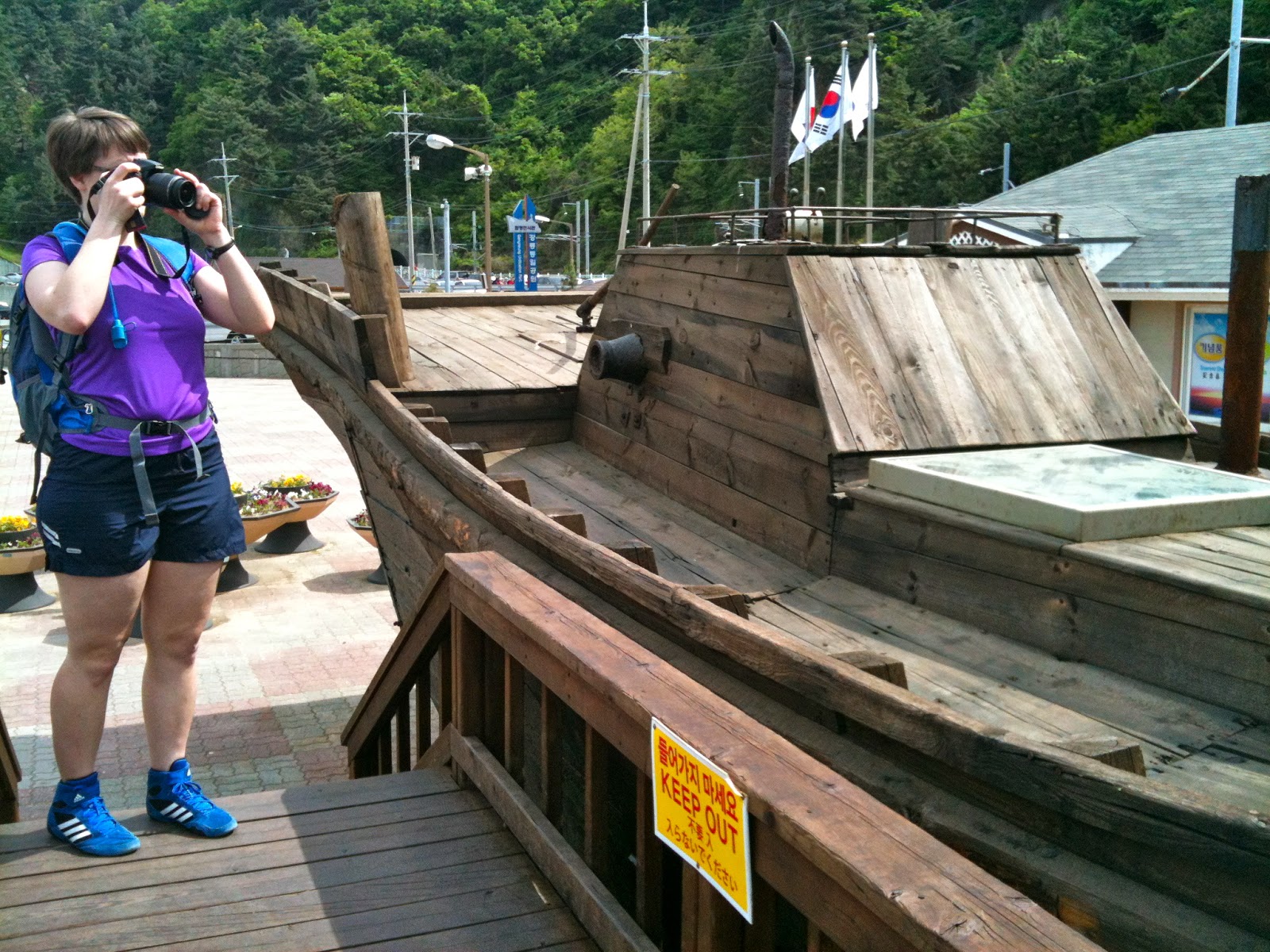
In this section there is a huge warship that Korea purchased from the US and used for a while. The ship itself is cool, but we couldn't find out too much of its history since, again, signs were in Korean. We did have an enthusiastic, older volunteer who shared some interesting stories with us about the first Korean novelist, who was from Gangneung, and his father who was from North Korea.
Tire on the boat

The best part by far was at the end of this park. There were two other seafaring vessels, one a homemade boat and one a submarine, both with fascinating stories. The boat was used in 2009 as a means to defect by 11 North Korean Refugees.  I was surprised to see how recently such an escape had occurred, and the boat itself was an amazing construction of everyday objects. The submarine told an even more exciting tale of 25 North Korean spies getting stranded on land due to rough waters. The submarine got stuck trying to get closer to shore, so the North Koreans set it on fire and were caught/killed attempting to walk back home. This explained the barbed wire and big guns all along the shoreline, and added quite a bit to my clearly very weak understanding of the history and climate between these two countries. Although we started the day slightly underwhelmed, by the end of our tour through Unification Park we were pleased with our decision to check it out.


Haslla Art World (하슬라아트월드)

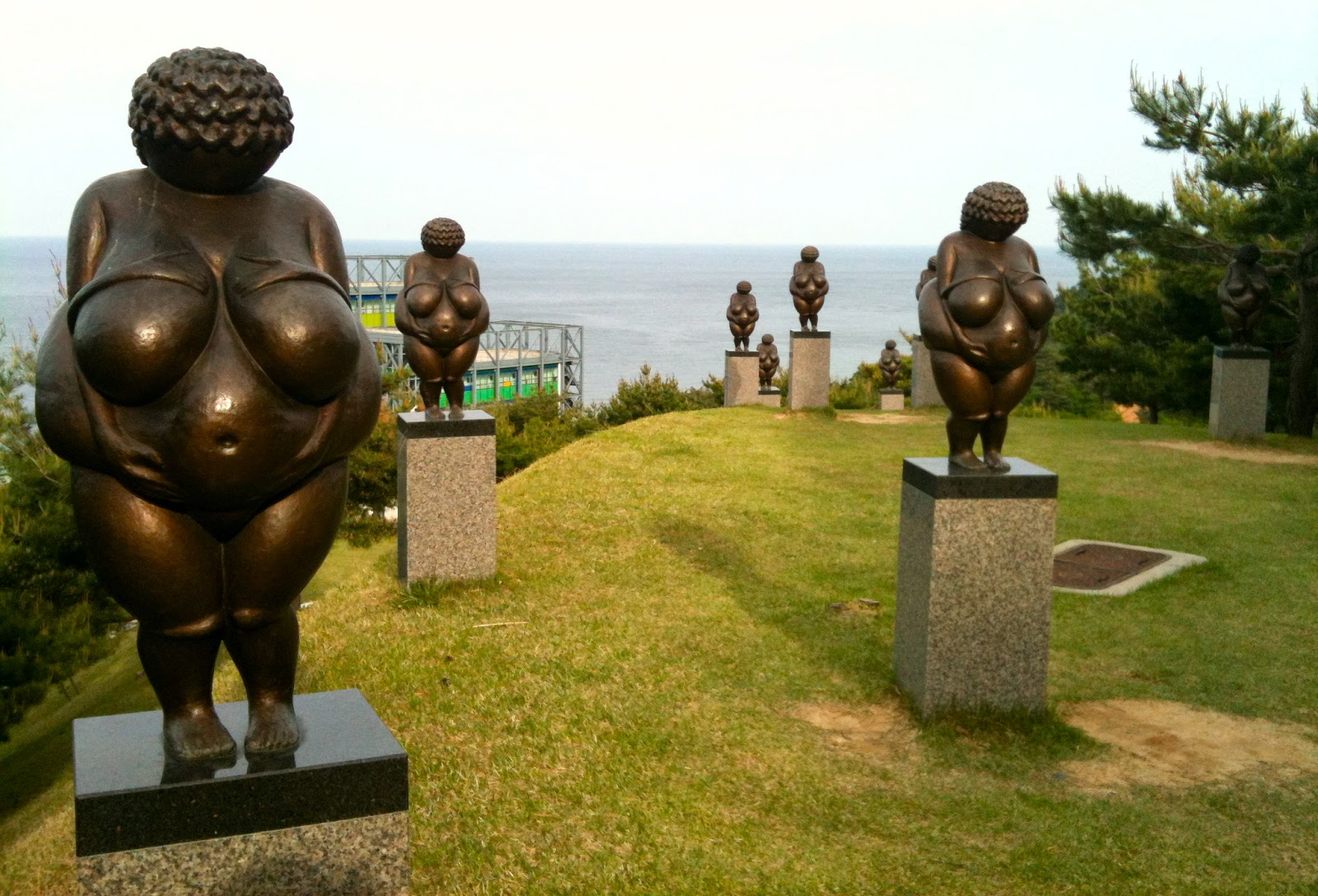
After Unification Park, we realized we were already close to an indoor and outdoor art museum, so we waited around for the bus to take us to the Haslla Art Park. (Pro Tip #2: get food at the 7Eleven by the submarine/boat/ship. Aside from expensive museum dining, there's not really many other options) The museum was small, but the park was beautiful and a nice way to end a gorgeous day. It's basically a large arrangement of paths on a hillside that overlooks the East Sea. The art was cool, the view was lovely, and Korea once again delivered with satisfyingly organized and efficient markers directing you around the park so you were sure to see everything.


If you look closely, you can see the awesome cruise ship hotel "marooned" in the background.

Raw Fish (회)
That night we were delighted to meet up with more friends, and our group split up for a choose-your-own-adventure dinner. I ended up getting the famous raw fish. The price didn't look friendly, so we had resisted temptation the first night. But this time we had a Korean friend to help us around the menu and assure that we would receive enough food. For a hungry group of four, we ordered a medium sized plate of two kinds of fish: Rock fish and Flat fish. We were delighted when the meal came with tasty seaweed soup and a huge sampler plate of other raw fish for appetizers: shrimp, octopus, scallops, and more. The fish we actually ordered was delectable. I liked the flat fish better, as it was more buttery, but both were excellent choices. We even struggled to be clean plate rangers, which made the price (about $34 a piece, compared to the standard $10-15 for a meal), well worth it. I love fish, so I was in heaven.


 This is buttery as f***!  10/10
So many flavors!


It should go without saying that the night concluded with more fireworks and round two of vacation norebang.

Chamsori Gramaphone and Edison Science Museum (참소리축음기 & 에디슨과학박물관)

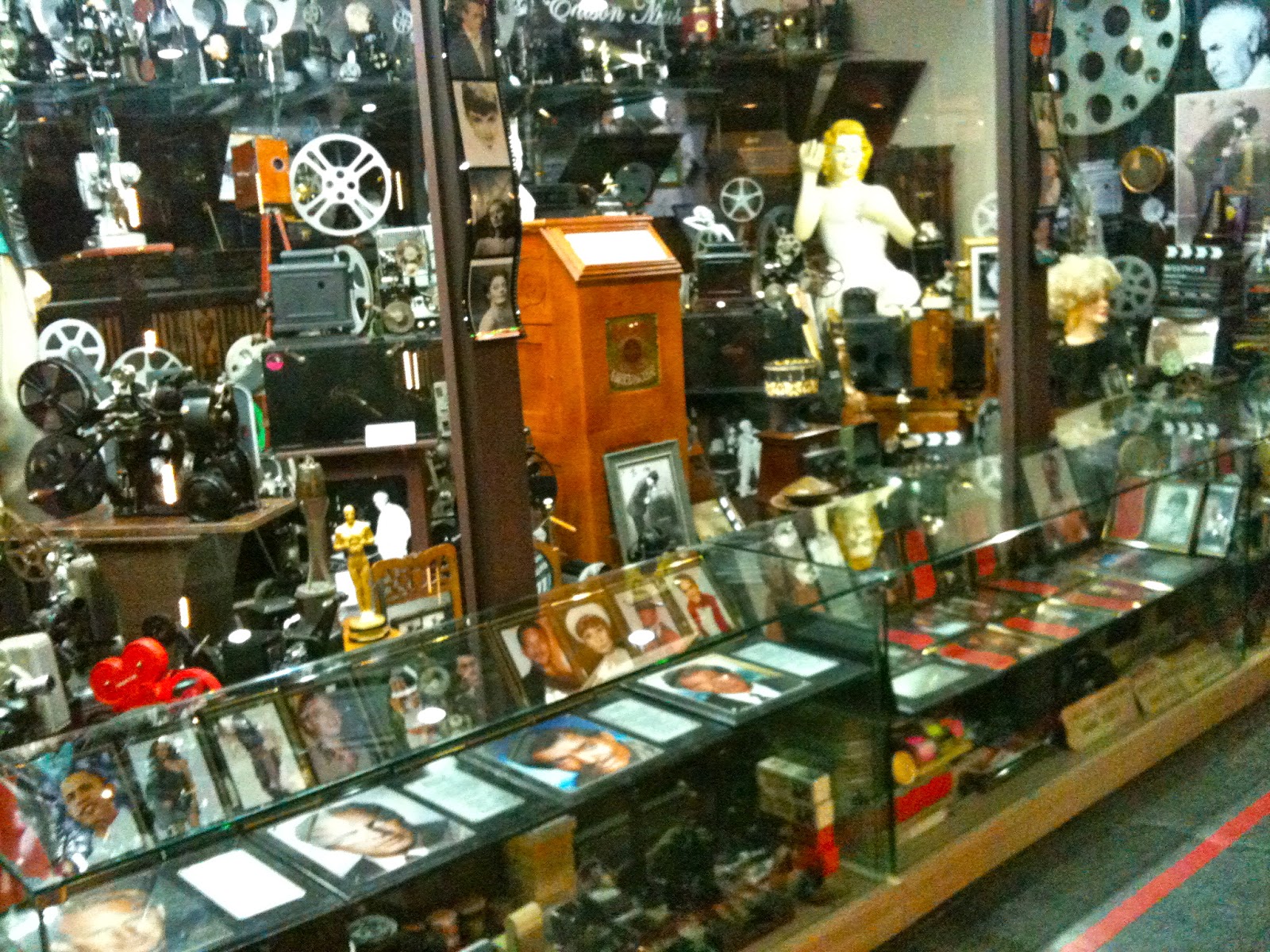
The next day was Monday and Korean Children's Day. Sort of like Mothers' or Fathers' Day, but for kids.  Incidentally, later in the month Korea celebrates Parents' Day and Teachers' Day, so I think the comparison is fairly valid. We took a cab to the Chamsori Gramaphone and Edison Science Museum, confusingly advertised as the third largest collection of Edison Artifacts in the world. In fact, the whole museum in confusing. It started out normal enough; a lobby packed with families and a pamphlet explaining the owner's intentions for the museum to be world-renowned made me think it would be an informative and kid-friendly experience. The first room was full of music boxes and gramaphones and the second had a bazillion light bulbs.  But as we followed the arrows through the halls, the displays were progressively weirder. Glass cases jammed with products manufactured by the Edison company seemed to be a stretch from our original understanding of the museum.  Then there was the exhibit dedicated to Edison's impact on Hollywood, with plaques about Justin Beiber and an Obama bobble head. Another room resembled someone's grandmothers' attic, with old televisions, radios, Coke Cola memorabilia, weird paintings. The true moment of bafflement occurred at every stairwell shrine to the owner himself. Rows upon rows of photographs of him in what seemed to be vacation spots, or posing with various celebrities. By the end we concluded that the museum was more an exhibition of the passions of a somewhat organized and likely wealthy hoarder. I think the experience was worth the time, we spent about an hour wandering around in entertained bewilderment, but it seemed more a lesson about Korea.  What that lesson is...we're still not sure.


Gyeongpodae Pavilion (경포대)
Our next stop was right next to the Edison Museum. The Gyeongpodae Pavilion was one of my priorities for the trip as I was able to read about it before arriving in Gangneung. It dates back to 1326, but Korea really likes relocation and restoring things, so I have no clue how old the current real deal really is. Famous for the view it offers of its unique location, the pavilion is on a sizable lake which literally a stone's throw from the beach. From the pavilion, you're supposed to be able to see the moon five times: once in the sky, once in the lake, once in the sea, once in a drinking glass, and once in eyes of a lover. We went around 1pm so we didn't see the moon at all, but it was really cool to see this beautiful lake and to make out a glimpse on the sea between the hotels and trees that line Gyeongpo beach.
Foreground: Lake. Dark blue square in center back: Ocean.  Apparently it was BYOLover
Traditional Houses (한옥/Hanok)
We made another mistake and decided to walk to our last two destinations of the trip: two traditional Korean nobility houses, Seongyojang (선교장) and Ojukheon (오죽헌). Seongyojang was a essentially a museum without all the boring being-inside bits, a museum of showing and not telling. Instead of having a random iron pot and explaining how it was used, visitors can piece together normal life based on the locations of different buildings, the division of the home into sections, the architecture and strategically placed furniture, as well as the occasional explanatory placard.


Heated floors
Proper party flow (for Mom)


Ojukheon was a much more popular attraction, probably because it is featured on some Korean bills. Two Korean historical figures lived at the home, Scholar Yulgok Yi Yi and his mother, Shin Saimdang, both of whom have spots on different notes of the Korean Won. Yulgok Yi Yi is known as the father of Korean Confucianism, and his mother was an artist, calligrapher and poet who is considered a model for Korean women. Unfortunately (for me, at least) much of the information at this house was in Korean, but with the help of Wikipedia I've managed to put together some of the picture. Yulgok was essentially a child prodigy, particularly in civil service, as well as three major Eastern religions: Confucianism, Taoism, and Buddhism. One particularly striking anecdote is that Yulgok proposed to the king  the army in preparation for an attack by Japan. The king refused, and of course, nine years later, Japan invaded Korea. And Yulgok didn't even get to gloat (or have to deal with the devastation of Korea, depending on how you look at it) because by that time he had been dead for eight years.


That night we struggled with taxi drivers to find a place for chimek (fried chicken and beer), but it was still better than walking around as we had been doing for the whole vacation. (Pro Tip #3: I prefer public transportation and walking, but everything was farther than it seemed- take a cab!) After lighting some last fireworks, we crawled into bed early, to mirror the early start we had planned for the next morning.


Sunrise


A couple notes on the vacation as a whole (skip this part if you like)  
We decided to take the train instead of the Express Bus, as it was a holiday weekend and we anticipated lots of traffic.  From reports from other travelers who had taken the bus, it seems like our travel time was about the same.  The train takes a roundabout route, so even though it's only a three hour drive from seoul it was nearly a six hour train ride. Still, the train was lovely and provided a nice tour of the Korean countryside. The last stretch runs right alongside the shore, and we even passed through the station with the world record for it's proximity to the ocean (or something like that, I didn't look up the fact).  So that was cool!

We didn't make it up to Jumunjin Beach, the Coffee Museum, or the fantastically shaped rocks at Sogeumgang.  Our tour guide on the war ship told us not to go to the coffee museum, plus it would have taken far to long to get there by bus (although knowing us we probably would have decided to walk). One of our awesome friends from the hostel had hiked Sogeumgang before we arrived and let us know that the path was blocked off pretty early, so we decided against that. We didn't do Jumunjin because after raw fish night we were all fished out.


Choosing vacation destinations is difficult, especially when you have limited funds, limited time, and limited information. Having already been to Busan, we wanted to see something new and chose Gangneung for not really any reason in particular. In the end, I think it was a good idea. At this time of year, it's too cold for beach bumming no matter where you go in Korea. Jeju was out of the picture because the flights were sold out. We weren't exactly sure what we were getting ourselves into, from the moment we booked our hostel to the time we arrived at the train station, but that's part of the excitement of vacation: making choices, finding adventures, and learning from it. We made some awesome friends, spent a lot of money on fireworks, and saw many things we will never see again. It was round two of winning vacation.